5 min read
The Forgotten Legacy of the Ethiopian Zion Coptic Church in Jamaica
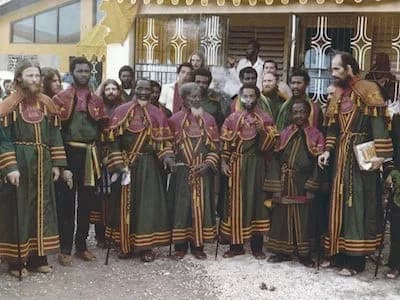
The Forgotten Legacy of the Ethiopian Zion Coptic Church in Jamaica
The Forgotten Legacy of the Ethiopian Zion Coptic Church in Jamaica
The Forgotten Legacy of the Ethiopian Zion Coptic Church in Jamaica
The Forgotten Legacy of the Ethiopian Zion Coptic Church in Jamaica
Origins and Early Foundations (1940s–1960s)
In the mid-20th century, a unique religious movement emerged on the fringes of Jamaican society. The Ethiopian Zion Coptic Church, an offshoot of the Rastafari movement, was founded in the 1940s by Lovell “Brother Louv” Williams. The first Coptic camp was established at Mountain View Avenue on the outskirts of Kingston. Here, on captured government land at the foot of Wareika Hills, Brother Louv gathered a small group of followers who lived simply, engaging in spiritual discussions, or “reasoning” sessions, accompanied by the sacramental use of ganja (marijuana).
The Coptics based their beliefs on the Bible and the teachings of Jamaican nationalist Marcus Garvey, emphasizing Ethiopian destiny and black self-reliance. While sharing some elements with Rastafari — such as reverence for Ethiopia and cannabis use — the Coptics forged their own path. Brother Louv taught a doctrine known as Rastafari’s “Holy Trinity” of “The Man, The Herb, and The Word,” emphasizing humanity, cannabis, and scripture. Unlike mainstream Rastafarians, the Coptics did not deify Emperor Haile Selassie I but maintained a Bible-centered theology. Despite their small numbers and societal marginalization, the Coptics viewed themselves as guardians of the true faith. Brother Louv prophesied that one day their movement would grow beyond Jamaica, attracting seekers from all backgrounds. He passed away in 1969, but his teachings laid the foundation for the church’s expansion in the coming decades.
Growth and Economic Power (1970s)
The 1970s marked a period of rapid growth for the Ethiopian Zion Coptic Church. Leadership transitioned to a new generation of elders, including Keith “Brother Niah” Gordon, Walter “Brother Wally” Wells, Brother Ivy, Brother Vernon, Brother Sam, and Brother Abraham. Under their leadership, the church expanded both spiritually and economically, attracting a diverse group of followers, including young white Americans disillusioned by the Vietnam War and drawn to the church’s teachings.
Under Brother Niah’s pragmatic guidance, the church established a self-sufficient economic base. Initially centered in rural Trelawny, the movement expanded to the eastern parish of St. Thomas, where the Coptics acquired thousands of acres of land. This land, previously underutilized or abandoned, was transformed into a thriving agricultural and industrial community known as “Coptic Heights.” The Coptics planted coconut palms, bananas, yams, ginger, tobacco, sugarcane, and other crops, providing employment for thousands of Jamaicans. They also established trucking companies, a furniture factory, a cement plant, and a supermarket in Kingston, all of which contributed to Jamaica’s struggling economy.
Funding for these operations came primarily from the international ganja trade. The Coptics viewed the export of marijuana as both a religious mission and an economic necessity, reinvesting profits into the development of their community. Their large-scale land acquisitions and financial investments played a crucial role in supporting Jamaica’s economy during a time of political and economic turmoil. Many landowners, eager to leave the country under Prime Minister Michael Manley’s socialist policies, were willing to sell their properties for hard currency, which the Coptics provided.
Religious Beliefs and Sacramental Use of Ganja
At the core of the Ethiopian Zion Coptic Church was a deep spiritual commitment to cannabis as a sacrament. Unlike recreational drug use, the Coptics believed that ganja was a divine gift, explicitly mentioned in biblical scripture. They cited passages such as Genesis 1:29 — “Behold, I have given you every herb bearing seed” — as justification for its use in worship and daily life.
The church’s religious practices combined Christian traditions with African-Jamaican spiritual elements. Ceremonies included Bible readings, Nyahbinghi drumming, and chanting. The Coptics adhered to a strict moral code, emphasizing communal living, self-discipline, and spiritual enlightenment through daily meditation and the use of cannabis. Their structured religious framework was so compelling that even secular authorities acknowledged its legitimacy. In 1979, the Florida Supreme Court ruled that the Ethiopian Zion Coptic Church constituted a legitimate religion and that cannabis was integral to its practice.
Challenges, Legal Struggles, and Decline (1980s)
The church’s rapid expansion and economic success attracted the attention of law enforcement. In 1979, CBS’s 60 Minutes aired a documentary featuring the Coptic community in Jamaica, showing members openly smoking ganja — including children. The segment, intended to showcase their faith, instead sparked outrage, prompting intensified legal scrutiny.
In the United States, federal authorities indicted several Coptic leaders on drug trafficking charges. Thomas “Brother Louv” Reilly, who had played a major role in the movement’s international expansion, faced multiple trials. Despite legal defenses citing religious freedom, U.S. courts ultimately ruled against the Coptics, sentencing many members to lengthy prison terms. James “Jimmy” Tranmer received a 33-year sentence, exemplifying the era’s harsh drug policies.
In Jamaica, the government of Edward Seaga, under pressure from U.S. authorities, took steps to dismantle the church’s operations. Ganja shipments were seized, and police increased surveillance of Coptic properties. The church’s leadership suffered a major blow with the death of Brother Niah in 1986, marking the beginning of the community’s decline. Without its key leaders and financial support, the movement fractured. By the late 1980s, much of the land acquired by the Coptics had been reclaimed by the Jamaican government or sold off.
Forgotten Legacy and Modern Reflections
 Today, the Ethiopian Zion Coptic Church is largely absent from mainstream discussions of Jamaican history. Often dismissed as mere smugglers, the Coptics’ contributions to the island’s religious, economic, and cultural landscape have been overlooked. Yet, their impact was profound. They demonstrated that marginalized communities could achieve economic self-sufficiency, provided thousands of jobs, and challenged global drug policies by advocating for cannabis as a sacrament.
Their stance on ganja predated modern legalization movements, and their arguments for religious freedom in cannabis use have influenced contemporary discussions on decriminalization. The Coptics’ story is a testament to the power of faith, self-reliance, and resilience in the face of persecution. Their vision of a self-sustaining spiritual community remains an important, albeit forgotten, chapter in Jamaican history.
As Jamaica and the world continue to revisit cannabis laws and religious freedoms, the Ethiopian Zion Coptic Church’s legacy deserves recognition. Their rise and fall reflect the complex interplay of faith, economics, and law, offering lessons that remain relevant today. By shedding light on their story, we honor a movement that sought to create a just and self-sufficient society, leaving behind an indelible, if often ignored, mark on history.
By Willy London on March 12, 2025.
Exported from Medium on April 10, 2026.